
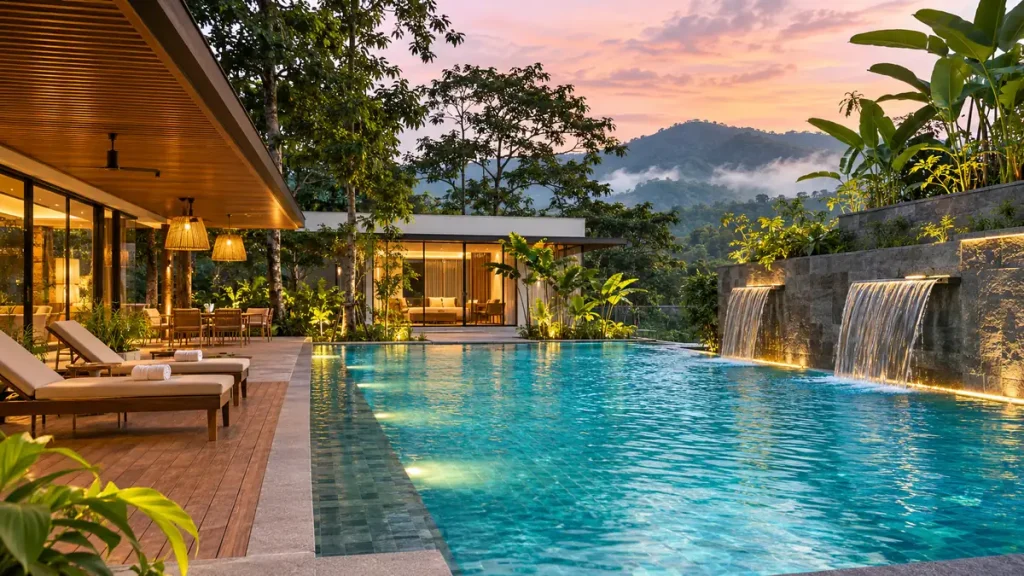

A swimming pool adds recreational value to homes and can enhance the guest experience at hotels and resorts.
However, a successful pool involves much more than an attractive shape or finish. Site assessment, engineering, waterproofing, circulation, and filtration all influence its durability and maintenance.
1. Define the Purpose Before Choosing a Design
Start by identifying how the pool will be used. A family pool may prioritise recreation and easy access. A lap pool needs a layout suited to exercise, while a resort pool must accommodate guest numbers, access, and maintenance.
Consider the available space, site conditions, budget and ongoing maintenance. Allow space for the deck, access, and equipment. Assess soil, groundwater, slope, drainage, and nearby structures, and check applicable local requirements.
Choose a design that suits the property and its users.
2. Explore Swimming Pool Designs
Rectangular and Geometric Pools
Rectangular and geometric pools have clean lines and complement contemporary homes and villas. Space planning may be straightforward, but structure, circulation, and deck layout still need attention.
Infinity Pools
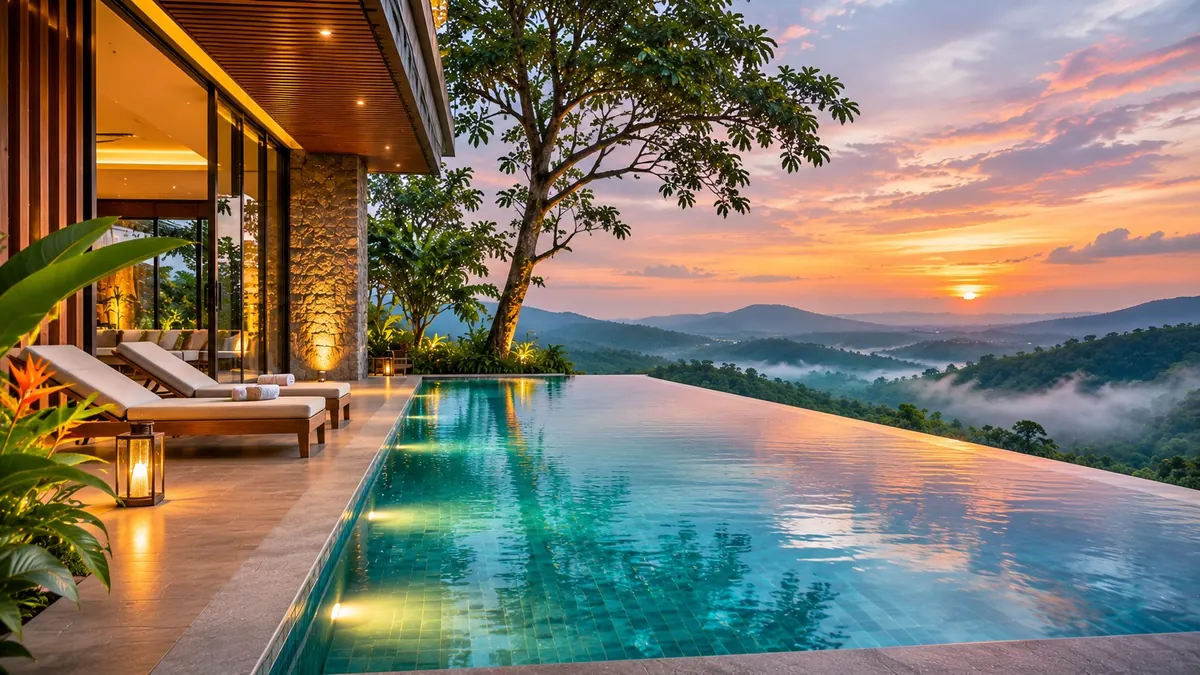
Infinity pools create the impression that water extends to the horizon. They are often considered for scenic views, elevated locations and sloping sites.
Natural-Style Pools
Natural-style pools use organic shapes, planting and natural-looking materials to connect the pool with the landscape. Plant selection should account for root growth, falling leaves, and maintenance access.
Indoor Swimming Pools
Indoor pools can be incorporated into homes, hotels and wellness facilities. They need ventilation, humidity control, drainage and moisture-resistant materials.
Plunge and Compact Pools
Plunge and compact pools can suit smaller plots, courtyards and limited outdoor areas. Plan for safe access and equipment servicing, even in compact spaces.
3. Assess the Site Before Construction
Site assessment identifies challenges early.
Soil conditions influence excavation and foundation design. Groundwater is particularly important for below-ground pools: the engineer must consider external water pressure on the structure, including when the pool is empty.
Sloping land may require additional excavation, retaining structures and carefully planned drainage.
Construction access matters too. Restricted access for machinery, materials and workers can affect the construction method, programme and cost, especially at existing homes or properties on difficult terrain.
For rooftop or elevated pools, available terrace space does not prove that the building can support the pool. A qualified structural engineer must assess the supporting structure before proceeding.
4. Prioritise Structural Engineering
A swimming pool is a water-retaining structure. Its design must respond to the pool’s dimensions and depth, soil and groundwater conditions, foundation requirements, water pressure, external pressure when empty, and nearby buildings.
Structural requirements differ for ground-level, sloping-site, and rooftop pools. A qualified structural engineer should determine the design.
Resolving these matters before construction helps reduce major changes during execution, which can cause delays and additional costs.
5. Plan Waterproofing from the Beginning
Waterproofing helps prevent leakage through the pool structure and protects surrounding areas. It should be considered during planning, not treated as a coating to apply only after construction.
Pay particular attention to construction joints, wall-to-floor junctions, pipe penetrations, service openings, overflow connections and drainage details.
Surface preparation, compatible materials and correct application are essential.
6. Design Circulation, Filtration and Drainage
A pool needs a suitable water-management system to maintain water quality. Pumps move water through the system, filters remove suspended particles, and disinfection or treatment equipment helps control harmful microorganisms.
Equipment may include pumps, filters, skimmers or overflow arrangements, inlets and outlets, pipes, valves and treatment equipment.
Select equipment according to the pool’s water volume and intended use, and provide access for inspection and servicing.
Plan drainage for rainwater, overflow and equipment discharge alongside the pool and deck.
7. Choose Suitable Tiles and Finishes
Pool tiles and mosaics offer different colours, textures and visual effects, but products and installation materials must be suitable for continuous water exposure.
Natural stone can work well in poolside and landscape areas when its performance, surface texture, cleaning and maintenance needs are considered.
Pool coping and surrounding flooring also deserve attention. Choose durable materials and consider slip resistance when surfaces are wet. Consider safety and maintenance as well as appearance.
8. Understand the Factors That Affect Construction Cost
There is no single price for every swimming pool. Two pools of similar dimensions can have different costs because of site conditions, engineering, equipment and finishes.
Key cost factors include:
- Pool size, depth and shape.
- Soil, groundwater, slope and construction access.
- Excavation, structural work and waterproofing.
- Pumps, filters, plumbing and treatment equipment.
- Tiles, coping and poolside flooring.
- Drainage, landscaping, lighting and additional features.
- Equipment-room provision and maintenance access.
When comparing quotations, check that each covers the same scope. Confirm whether structural construction, waterproofing, filtration, plumbing, electrical work, tiles, drainage and poolside development are included.
Review exclusions, extra-work rates, stages and payment terms. Compare the complete scope, not just the final price.
9. Avoid Common Construction Mistakes
Common mistakes include choosing a design without assessing the site, overlooking structural requirements, leaving waterproofing until late, underestimating filtration needs, ignoring drainage, selecting finishes only for appearance and forgetting access to pumps and filters.
Frequent changes during construction can also affect structure, plumbing, equipment, and landscaping. Finalise key decisions and coordinate the professionals before work begins.
10. Project Reference: Moois Paithal Resort, Kannur
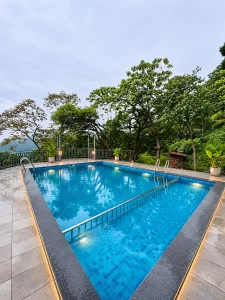
Mariya Group’s swimming pool project at Moois Paithal Resort in Kannur, Kerala, is set within a green natural environment. The pool features a geometric layout and a spacious surrounding deck, creating an inviting recreational area for resort guests.
Landscape, access, expected use, water systems, and maintenance all contribute to the guest experience.
Mariya Group has completed 500+ projects across its services. This is the company’s overall project experience, not a swimming-pool count.
Frequently Asked Questions
Can I build a pool on a small plot?
A compact pool may be possible, subject to space, access, local requirements, and technical feasibility.
Can I build a pool on an existing rooftop?
Only after a qualified structural engineer confirms that the supporting structure can safely accommodate the additional loads.
What affects swimming pool construction costs?
Dimensions, site conditions, structural work, waterproofing, equipment, finishes, and surrounding development all affect cost.
Does a swimming pool need regular maintenance?
Yes. Cleaning, water treatment, filtration and equipment inspection are necessary to maintain water quality and proper operation.
Planning a Swimming Pool? Speak with Mariya Group
A successful pool combines a suitable design with engineering and coordinated construction.
If you are considering a swimming pool for your home, villa, hotel or resort, contact Mariya Group to discuss your site, requirements and project scope.

